Last updated: 14 January 2026 · Reviewed by: Claire Bennett, senior casino content editor, with our iGaming research and compliance desk · Reading time: ~30 minutes · 18+ only
Table of Content
- The expert verdict in sixty seconds
- Five myths about Lucky Penny and penny slots, cleared up
- 1. Why this review is structured differently
- 2. Evidence-based parameter card for Lucky Penny
- 3. Technical specifications: what is commercially reported
- 4. The complete paytable and symbol values
- 5. Game layout, symbols and winning combinations
- 6. Hold and Win mechanics: rules and what research implies
- 7. The four fixed jackpots and how they are awarded
- 8. Free spins: activation and behaviour
- 9. Lucky Penny bonus buy: evidence and unknowns
- 10. RTP, house edge and how long your deposit really lasts
- 11. Volatility, risk and the concentration of harm
- 12. Potential wins and realistic expectations
- 13. Lucky Penny demo: how to use it and why it may mislead you
- 14. Simulated and demo gambling in the Australian research base
- 15. Lucky Penny mobile: browser, app downloads and the crash-game myth
- 16. Lucky Penny real money: access in Australian casinos and bonus evaluation
- 17. Payments, withdrawals and KYC: what to check before you deposit
- 18. Legality, safety and the Australian regulatory picture
- 19. Developer, related games and positioning among other slots
- 20. Gambling risks and harm: evidence-based framing
- 21. Practical responsible gambling measures specific to Lucky Penny
- 22. Who should skip Lucky Penny
- 23. Alternatives and comparison logic
- 24. Overview of included studies and data sources
- 25. FAQ: Lucky Penny questions answered
- 26. Appendix A: superseded and revised passages
- 27. Appendix B: pre-play checklist
- 28. Appendix C: glossary of terms
Lucky Penny slot: an evidence-based Australian review of the 3 Oaks Gaming pokie, its demo mode, RTP and real-money risks
Provider
3 Oaks Gaming
RTP
95.64%
Volatility
High
Min bet
$0.10
Max bet
$2.20
Max win
12,500x
The expert verdict in sixty seconds
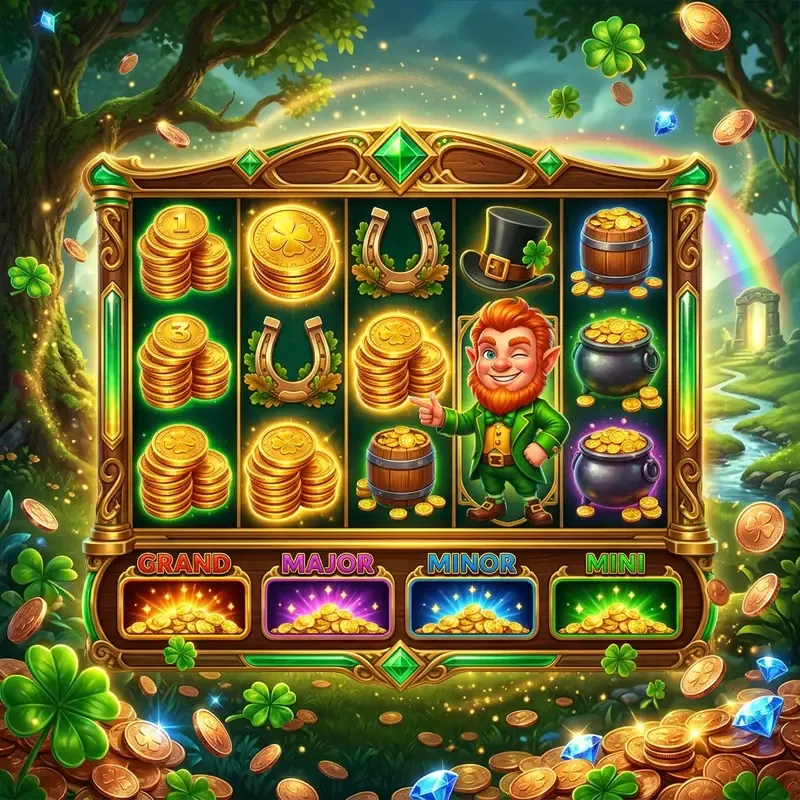
- What it is:Lucky Penny is a classic five-reel, three-row (5x3) video slot with 25 fixed paylines, built by 3 Oaks Gaming (the studio previously branded as Booongo). It is not a crash game, despite what several widely circulated reviews claim.
- The single best thing about it:the Hold and Win respin round with four fixed jackpot tiers gives the game a clear, understandable "collect the coins" objective, and free spins trigger relatively often for a high-volatility title (commercially reported at roughly one in every 120 spins).
- The single biggest risk:the commercially advertised RTP of 95.64% translates to a house edge of 4.36%, which is materially worse than a 96.8% pokie. On $1 spins, a $100 balance is mathematically exhausted after roughly 2,294 spins, about two hours of continuous play, compared with roughly 3,145 spins on a 96.82% game. High volatility means most of that time you will be waiting, not winning.
- Who should skip it:anyone with a bankroll under 100x their intended bet size; anyone who dislikes long dry spells; anyone who has previously chased losses on electronic gaming machines; and any Australian resident who is not entirely clear about the legal status of the platform they are considering.
- A note on evidence quality up front:this review separates three very different classes of information. First, commercially reported specifications (RTP, volatility, hit frequencies, paytable values) which come from operator and aggregator listings and which we have not been able to verify against a provider certification sheet or an independent test-lab report. Second, peer-reviewed and government research on how slot-style products behave and what harm they cause in Australia, which is fully cited. Third, clearly flagged inference, where we reason by analogy from the research base. We tell you which is which throughout, because most reviews of this game do not.

Five myths about Lucky Penny and penny slots, cleared up
Before the detail, a quick clearing of the ground. These five beliefs turn up constantly in comments, forums and affiliate copy, and each one costs Australian players money.
Myth 1: "Lucky Penny is a crash game." No. It is a reel-based pokie with a paytable, scatters, wilds and a Hold and Win round. At least one heavily indexed review describes a rising multiplier and a cash-out button. That review is describing a different product entirely.
Myth 2: "A penny slot is cheap by definition." The minimum bet is low, roughly $0.10, but cost per hour depends on spin speed and house edge, not on the word "penny". At three seconds per spin, even $0.20 stakes turn over about $240 an hour.
Myth 3: "The reels get hot or cold." Every spin is resolved independently by a random number generator. A drought of 300 spins tells you nothing about spin 301. Nothing at all.
Myth 4: "The lucky penny demo shows me what real money will do." Australian research suggests the opposite risk: practice versions can run hotter than the paying versions, and simulated play is linked to more real-money gambling later, not less.
Myth 5: "Bigger bets improve the odds." They do not. The 4.36% edge is identical at $0.10 and at $2.20. Raising the stake only speeds up the arithmetic, in both directions.
Keep these five in mind and most of the promotional noise around Lucky Penny slots becomes easy to filter.

- Why this review is structured differently
Most reviews of a slot game are written from a promotional brief. They assert an RTP figure, praise the graphics, describe the bonus round in glowing terms, and end with a call to action. The problem with that format is not that it is dishonest, exactly. The problem is that it presents commercial marketing data with the same confidence as verified fact, and it says almost nothing about what actually happens to the people who play.
This review does something different. It gives you the full commercial specification, because you came here to find out what the game does, and withholding that would be useless. But it holds that specification at arm's length and labels it as commercially reported rather than independently verified. Then it sets the game inside the Australian evidence base on electronic gaming machines, simulated gambling and online gambling harm, which is genuinely large, genuinely peer-reviewed, and almost never mentioned in slot reviews.
The result is longer and less flattering than a typical review. It is also more useful, because the questions that matter most to an experienced Australian player, is this legal for me, how fast will my money go, what are the bonus terms really, how long do withdrawals take, and what happens if I lose control, are questions that promotional copy is structurally incapable of answering.
A note on missing primary sources. During research for this article, we were unable to locate an official 3 Oaks Gaming specification sheet, a paytable PDF published by the provider, or an independent test-house certification report for Lucky Penny that we could cite directly. Every numeric parameter below therefore carries the label commercially reported. Where operator listings agree with each other, we say so. Where they contradict each other, and they do, spectacularly, on the question of what genre this game even belongs to, we say that too, and we explain which claim is wrong and why.

2. Evidence-based parameter card for Lucky Penny
This card separates what is commercially reported from what is independently verified, and from what remains genuinely unknown. Read the third column carefully; it is the most honest part of any slot review you will read today.
| Parameter | Commercially reported value | Verification status |
|---|---|---|
| Game name | Lucky Penny | Consistently reported across operator listings |
| Provider | 3 Oaks Gaming (formerly branded Booongo) | Consistently reported; some listings still say "Booongo", which is the legacy brand rather than a different studio |
| Game type | Video slot / pokie, reel-based with fixed paylines | Confirmed by the presence of a paytable, scatter and wild symbols across multiple independent listings. Claims that this is a crash game are false |
| Grid | 5 reels × 3 rows | Consistently reported |
| Paylines | 25, fixed | Consistently reported |
| RTP | 95.64% | Commercially reported figure. Appears consistently across two independent aggregators. No provider certification or test-lab report located. One outlier listing claims 96%, which we treat as unreliable given it also misdescribes the game genre |
| House edge | 4.36% (derived as 100% − 95.64%) | Arithmetically correct given the RTP claim; inherits the RTP's verification uncertainty |
| Volatility | High | Reported as High by the more detailed sources. One shallow listing says "medium", which conflicts with the reported free-spin frequency, jackpot structure and max-win multiplier. We treat "high" as correct and "medium" as an error |
| Bet range | Approximately $0.10 to $1.25 per spin, with some operators offering up to about $2.20 | Varies by operator and currency. Verify in-client before your first spin |
| Maximum win | Up to 12,500x stake | Commercially reported; not independently verified |
| Free spins trigger | 3 or more Gold Pot scatters award 8 free spins | Consistently reported |
| Free spins frequency | Approximately 1 in 120 spins | Commercially reported estimate. Treat as an empirical or modelled figure, not a certified one |
| Hold and Win trigger | 6 or more Penny Bonus coin symbols | Consistently reported |
| Hold and Win frequency | Approximately 1 in 300 spins | Commercially reported estimate; needs external verification |
| Jackpot tiers | Four fixed tiers: Mini, Minor, Major, Grand | Consistently reported |
| Wild behaviour | Substitutes for all paying symbols except scatter and bonus; can expand across a reel | Consistently reported |
| Bonus buy | Available at some operators, absent at others, and prohibited in some jurisdictions | Availability is operator- and jurisdiction-dependent. Cost of activation not verified |
| Mobile compatibility | HTML5, browser-based, Android 8.0+ / iOS 11.0+ | Reported; the lightweight client is described at roughly 9.4 MB |
| Release | Reported variously as 2024 by one listing | Inconsistent across sources; unresolved |
Important interpretive note. A commercially reported RTP is a long-run theoretical average across millions of simulated spins. It is not a promise about your session, your week or your year. In a high-volatility game, the gap between theoretical return and short-run experience is at its widest, which means that the number is least predictive precisely when players are most likely to consult it.
3. Technical specifications: what is commercially reported
Here is the specification in the form most readers want, with a comparison to broad category norms. The comparison column is contextual rather than certified; we have not been able to locate a definitive industry-average dataset for online slot RTP, so treat "industry average" here as a rough operator-reported benchmark rather than a verified statistic.
| Parameter | Lucky Penny | Contextual comparison |
|---|---|---|
| Provider | 3 Oaks Gaming (formerly Booongo) | An established studio in the Hold and Win sub-genre |
| Grid and paylines | 5×3 reels, 25 fixed paylines | Standard classic architecture for the category |
| RTP | 95.64% (commercially reported) | Sits in the mid band; operator listings commonly advertise 94–96% for slots, though we could not verify this range against a primary dataset |
| House edge | 4.36% | Higher than a 96.8% title, whose edge is 3.18% |
| Volatility | High | Commercially reported gaps of roughly 200–400 spins between major wins |
| Bet range | $0.10 to $1.25, up to about $2.20 at some operators | Wide enough for both low-stakes and higher-stakes play |
| Free spins frequency | Approximately 1 in 120 spins | Frequent relative to many high-volatility titles |
| Hold and Win frequency | Approximately 1 in 300 spins | Balances base game against jackpot chase |
| Maximum win | Up to 12,500x stake | High for a low-denomination themed slot |
| Small-win frequency | Reported small wins roughly every 8–12 spins | Frequent low-value returns; note that many of these will be less than the stake |
That last row deserves a flag. A "win" of $0.40 on a $1.00 spin is recorded by the game as a win, complete with celebratory sound and animation, but it is a 60% loss. Australian research on electronic gaming machine design has repeatedly noted that this class of reinforcement contributes to how gambling is perceived, particularly by younger people.
«Young Australians described bright colours, celebratory sounds and winning imagery as making gambling appear fun, exciting and omnipresent.» Source: It is always there in your face, ScienceDirect (2023). https://www.sciencedirect.com/science/article/pii/S2667321523000045
- The complete paytable and symbol values
This is the section most readers land on from search, so here it is in full. All values are commercially reported and expressed as multipliers of the line bet or total stake depending on the operator's presentation; verify against the in-client paytable before you play, because payout presentation conventions differ between operators.
Special symbols
- Wild (Lucky Penny). Substitutes for all paying symbols except the scatter and the bonus coin. Pays 500x for five on a line, 100x for four, and 25x for three. Can expand to cover an entire reel, which is what generates the multi-line wins that make this game's better sessions memorable.
- Scatter (Gold Pot). Reported to appear on reels 1, 3 and 5. Three or more anywhere awards 8 free spins with no additional wagering requirement. Further scatters landing during the feature retrigger it.
- Bonus (Penny Bonus). A coin symbol carrying a cash value independent of payline wins. Six or more on a single spin activates the Hold and Win respin round.
Standard symbol values
| Symbol | 5 on a line | 4 on a line | 3 on a line |
|---|---|---|---|
| Lucky Penny (Wild) | 500x | 100x | 25x |
| Lucky Horseshoe | 200x | 50x | 12x |
| Four-Leaf Clover | 150x | 40x | 10x |
| Ace (A) | 75x | 20x | 5x |
| King (K) | 60x | 15x | 4x |
| Queen / Jack (Q / J) | 50x | 12x | 3x |
How to read this table without fooling yourself. The 500x wild line-win looks spectacular, and it is the number that promotional copy leads with. But five wilds on a single payline in a 5×3 grid is an extremely low-probability event, and the reported maximum win of 12,500x is achieved through the jackpot and feature structure rather than through base-game line hits. The symbols you will actually see most often are the card royals at 3x to 5x for three of a kind, outcomes that in most bet configurations return less than the spin cost.
A useful discipline: before you play, work out what a three-of-a-kind Queen actually pays at your chosen stake, in dollars, and compare it to your stake. Sounds trivial. That single arithmetic exercise does more to calibrate expectations than any amount of reading about maximum win potential.
- Game layout, symbols and winning combinations
Updated. Lucky Penny uses a five-reel, three-row grid with 25 fixed paylines, which is a conventional architecture for contemporary online slots. We describe this configuration as reported for this specific title rather than as a general rule about "penny"-themed games, because we have not located a source that establishes a typical layout for that thematic category as a class. Similarly, we do not characterise Lucky Penny as a "low-denomination but high-frequency" game as a matter of verified fact; the bet range is genuinely low at the bottom end, and small wins are commercially reported as frequent, but "high-frequency" as a formal descriptor is not something we can source.
The symbol set follows the luck-and-treasure theme: pennies, horseshoes, four-leaf clovers, pots of gold and stylised card royals. Winning combinations form left to right along the fixed lines. Because all 25 lines are always active, there is no line-selection decision for the player to make, and the only in-game choices are stake size, spin speed and whether to engage autoplay.
That absence of meaningful decision-making is worth naming plainly. Some casino games involve strategy that measurably affects expected return. Reel-based slots do not. Every spin is an independent event resolved by a random number generator, and no pattern of stake variation, timing or button-pressing changes the mathematics. Any guide that suggests otherwise is selling you something.
Design features and how research reads them. The visual and auditory vocabulary of games in this class, bright colours, celebratory sounds, near-miss presentations, jackpot meters that fill visibly, has been studied in the Australian context. Qualitative research with young Australians found that participants described these design features as making gambling appear fun, exciting and omnipresent, even in ostensibly family-friendly venues or within sports broadcasts. Participants described embedded and persistent cues as factors that made gambling feel constantly present in daily life.

«Participants described embedded and persistent prompts, app icons, notifications and in-game cues, as making gambling ubiquitous.» Source: It is always there in your face, ScienceDirect (2023). https://www.sciencedirect.com/science/article/pii/S2667321523000045
We are not claiming that Lucky Penny is designed to cause harm. We are noting that the design grammar it shares with the broader electronic gaming machine category is a grammar that Australian research has examined and found consequential for how players perceive risk.
- Hold and Win mechanics: rules and what research implies
How the feature works. Six or more Penny Bonus coin symbols landing on a single spin trigger the respin round. The triggering coins lock in position. The player receives three respins. Each time a new bonus coin lands and locks, the respin counter resets to three. The round ends when three consecutive respins produce no new coin, or when all fifteen grid positions are filled. At the end, the cash values on all locked coins are totalled and paid, plus any jackpot the collection has qualified for.
The mechanic's appeal is transparent: it converts an abstract probability into a visible, incremental goal. You can see the grid filling. You can count the empty positions. The counter resetting to three feels like a reprieve. This is a well-constructed piece of game design, and it is worth understanding that its psychological pull is a feature of the design rather than an indication of favourable odds.
Prevalence caveat. Hold-and-Win style mechanics are frequently encountered in contemporary online slots marketed in Australia and internationally. We flag this as an observation drawn from operator catalogues rather than a verified market statistic; we could not locate a research source quantifying the prevalence of this mechanic.
What the research base implies. Australian evidence does not evaluate Hold and Win as a named mechanic. What it does establish is that harm concentrates in high-intensity products where money can be lost quickly. Features that increase the rate of exposure to high-variance outcomes are, by analogy, the features most worth treating cautiously.

«Evidence indicates over half of gambling problems in Australia are caused by electronic gaming machines.» Source: Browne et al., Journal of Behavioral Addictions (2023). https://www.greo.ca/Modules/EvidenceCentre/files/Browne%20(2023)_Evidence%20over%20half%20of%20gambling%20problems%20in%20Australia%20caused%20by%20EGMs_final.pdf
There is one further caution specific to how you are likely to first encounter this feature. If you meet Hold and Win in a demo, the emotional impact and apparent hit rate of the feature in demo mode may not be a reliable guide to real-money risk.
«Practice games on real-money sites often have inflated payout rates and may trigger bonus rounds more frequently than their real-money versions.» Source: Hing et al., The convergence of simulated gambling, monetary gambling and gambling harm (2025). https://www.health.govt.nz/system/files/2025-12/hing-et-al-convergence-simulated-gambling-monetary-gambling.pdf
And critically, simulated play does not appear to satisfy the impulse to gamble. In the Australian longitudinal evidence, the number of simulated EGM app sessions in a given week significantly predicted increased real-money EGM gambling the following week. There was no evidence of a "substitution" or "suppression" effect in which simulated play reduced monetary gambling.
7. The four fixed jackpots and how they are awarded
Lucky Penny carries four fixed jackpot tiers, awarded on the basis of how many bonus coins are collected during the Hold and Win round. These are fixed rather than progressive, meaning the values do not accumulate from player contributions.
| Tier | Reported requirement |
|---|---|
| Mini Jackpot | 6–8 bonus coins collected during the round |
| Minor Jackpot | 9–11 bonus coins collected |
| Major Jackpot | 12–14 bonus coins collected |
| Grand Jackpot | All 15 grid positions filled |
The structure is elegantly designed as a chase. Because the entry threshold is six coins, every Hold and Win round you trigger awards at least the Mini tier, which means the feature almost never feels like a loss. And because the Grand requires filling every one of the fifteen positions, the top prize sits at the end of a visible ladder that you can watch yourself climbing.
Two realities to hold alongside that design. First, the Mini jackpot in fixed-jackpot games of this type is typically a modest multiple of stake, so "guaranteed jackpot" is a phrase that does more work in marketing than in your balance. Second, filling all fifteen positions requires nine or more additional coins to land across a respin sequence in which the counter must keep resetting, a low-probability outcome by construction. We were unable to source a published probability for the Grand tier, and we will not invent one.
- Free spins: activation and behaviour
The free spins feature is the simpler of the two bonus systems, and the more frequently encountered.
- Land three or more Gold Pot scatter symbols anywhere on the reels. The scatters are reported to appear on reels 1, 3 and 5.
- Receive 8 free spins, with no wagering restriction attached to winnings from the round.
- Additional scatters landing during the feature retrigger it, extending the round.
- Expanding wilds are reported to appear more frequently during free spins than in the base game.
The commercially reported trigger frequency is approximately one in 120 spins. For a high-volatility game, that is comparatively often, and it is part of why the game sustains engagement despite long gaps between substantial wins. It also means that in a 500-spin session you might reasonably expect four free spin rounds and perhaps one or two Hold and Win rounds, a useful frame for calibrating what a session actually looks like.
Note that eight free spins is a short round by contemporary standards. Combined with the reported enhancement to wild frequency, the round tends to produce either a modest return or, occasionally, a genuinely large one. It is a variance amplifier rather than a reliable income stream.

- Lucky Penny bonus buy: evidence and unknowns
Some operator listings indicate that Lucky Penny offers a bonus buy option, allowing the player to purchase direct entry to the bonus feature instead of waiting for it to trigger naturally. Several important qualifications apply, and each of them matters more than the feature itself.
Availability is not universal. The option is absent at a number of casinos that carry the game, because operators can choose whether to enable it. More significantly, several jurisdictions have prohibited bonus buy features outright. Australian players should not assume the feature will be available, and should not treat its presence or absence as an indicator of an operator's quality.
Cost is unverified. We were unable to locate a verified activation cost, typically expressed as a multiple of stake. Treat any figure you see quoted for the Lucky Penny bonus buy as unconfirmed until you can see it in the game client yourself.
RTP may differ. In games that offer bonus buys, the theoretical return on the purchased feature is not always identical to the base game RTP. We have no verified figure for Lucky Penny specifically. If the buy option is available to you, check whether the client displays a separate RTP for it.
The risk logic is straightforward. A bonus buy is a mechanism that typically accelerates exposure to high-variance outcomes, and therefore would be expected, by analogy, to increase risk relative to standard base-game play. Australian harm research supports the general principle underlying that inference.

«Gambling problems in Australia are disproportionately linked to high-intensity products where players can lose money quickly, above all EGMs.» Source: Browne et al., Journal of Behavioral Addictions (2023). https://www.greo.ca/Modules/EvidenceCentre/files/Browne%20(2023)_Evidence%20over%20half%20of%20gambling%20problems%20in%20Australia%20caused%20by%20EGMs_final.pdf
Put concretely: if a bonus buy costs 100x your stake, a single purchase consumes what would otherwise be one hundred spins of play. Streamers and highlight-reel videos disproportionately feature bonus buys, because purchased features produce the dramatic outcomes that make watchable content. This creates a badly skewed impression of how often such outcomes occur, and it is worth being explicit that content designed for entertainment is not a representative sample of results.
- RTP, house edge and how long your deposit really lasts
This is where a slot review earns or loses its keep, so we will work through the arithmetic in full.
The house edge. With a commercially reported RTP of 95.64%, the house edge is calculated by subtraction: 100% − 95.64% = 4.36%. That means the mathematical expectation is that the operator retains 4.36 cents from every dollar wagered, averaged over the long run.
Why RTP bands matter. Broad convention among slot review sites places RTP below 94% in the "low" band, 94% to 96.5% in the "medium" band, and above 96.5% in the "high" band. On that basis, Lucky Penny's 95.64% falls into the medium band. That sounds unremarkable. The arithmetic below shows why it is not.
Session longevity: the calculation in full
Consider a comparison against a title with an RTP of 96.82%, whose house edge is 3.18%.

| Lucky Penny (95.64% RTP) | Comparison title (96.82% RTP) | |
|---|---|---|
| House edge | 4.36% | 3.18% |
| Starting balance | $100 | $100 |
| Stake per spin | $1.00 | $1.00 |
| Expected loss per spin | $0.0436 | $0.0318 |
| Expected spins before depletion | ~2,294 | ~3,145 |
| At ~3 seconds per spin | ~2 hours | ~2.5 hours |
| Difference in playing time | n/a | ~37% more play for the same $100 |
The workings: $100 ÷ 0.0436 = approximately 2,294 spins on Lucky Penny. $100 ÷ 0.0318 = approximately 3,145 spins on the comparison title. Two figures that look almost identical as percentages produce a difference of over 850 spins and roughly half an hour of play from the same deposit.
Three essential caveats on this model.
First, this is an expectation calculation, not a prediction. It describes the average outcome across many hypothetical sessions. Your actual session will diverge from it, often substantially, and in a high-volatility game that divergence will be larger. You may lose $100 in 150 spins. You may also, occasionally, finish ahead.
Second, the model assumes flat $1 stakes throughout and no reinvestment behaviour changes. Real sessions rarely work like that.
Third, and most importantly, the 95.64% figure is a commercially reported number we could not verify against a certification report. If the real figure differs, so does everything downstream of it.
Bankroll guidance. Because of the high volatility, the commonly cited guidance for this class of game is a minimum bankroll of 100x to 200x your intended stake per spin. At $1 spins that is $100 to $200; at $0.20 spins, $20 to $40. This is not a strategy for winning, because no such strategy exists, but a buffer that makes it more likely you experience the bonus features the game is built around before your balance is gone.
A word on the "risk profile by player type" framing. Operator reviews often segment advice into conservative, moderate and high-roller tiers, recommending progressively larger stakes. We reproduce the logic here for completeness: lower stakes of $0.10 to $0.25 extend session length, mid-range stakes of around $0.50 balance duration against return size, and maximum stakes access the largest absolute payouts. But with a caveat those reviews omit. Increasing your stake does not improve your odds. It increases both the size of wins and the rate at which the house edge consumes your balance. The 4.36% applies identically at every bet level.

- Volatility, risk and the concentration of harm
Lucky Penny is reported as a high volatility game. One shallow listing describes it as medium volatility; that claim is inconsistent with the reported four-tier jackpot structure, the 12,500x maximum win and the 200–400 spin gaps between significant wins, and we treat it as an error.
What high volatility means in practice. Outcomes are dispersed widely around the mean. Long sequences of losing or below-stake spins are normal, punctuated by occasional large wins concentrated in the bonus features. Commercially reported figures suggest around 75% of total returns come from bonus features rather than base game line wins, which, if accurate, means the base game is largely a mechanism for reaching the features.
The practical implication is that the theoretical RTP is a poor guide to short-run experience. A player who spins 300 times and loses their balance has not been unlucky in any meaningful statistical sense; they have had an ordinary session on a high-variance product.
Why this connects to harm. Australian research does not evaluate individual slot titles, but it is unambiguous about the product category.

«Evidence indicates over half of gambling problems in Australia are caused by electronic gaming machines.» Source: Browne et al., Journal of Behavioral Addictions (2023). https://www.greo.ca/Modules/EvidenceCentre/files/Browne%20(2023)_Evidence%20over%20half%20of%20gambling%20problems%20in%20Australia%20caused%20by%20EGMs_final.pdf
That composite analysis of multiple jurisdictional surveys found that over 50% of gambling problems, and about 90% of gambling problems overall, could be attributed to EGMs, casino gambling and race and sports betting combined. Online slots sit squarely in the first two of those categories in terms of structural characteristics.
Meanwhile, the distribution of risk within the Australian gambling population is shifting.
«The proportion of gamblers at 'risky' levels rose from 11.6% to 13.6% between 2023 and 2024.» Source: ANU, Gambling participation in Australia 2024 (2025). https://polis.cass.anu.edu.au/files/docs/2025/6/Gambling_in_Australia_2024_002.pdf
Overall participation remained broadly stable, but the proportion of gamblers at risky levels increased from 11.6% to 13.6%, suggesting that harm may be becoming more concentrated among a subset of gamblers who gamble more, and perhaps more intensively, rather than spread evenly across the population. If you are the kind of player who gravitates towards high-volatility products with jackpot chases and bonus buys, you are closer to that subset than to the average participant.
- Potential wins and realistic expectations
Updated. Earlier drafts of this section reasoned from a hypothetical 96% RTP. We have revised it to work from the figure actually reported for this game, while retaining the underlying arithmetic point.
The commercially reported maximum win is 12,500x stake. At a $1 spin that is $12,500. At the $0.10 minimum it is $1,250. These are the numbers that drive clicks, and they are technically accurate as ceiling values.
What they do not tell you is frequency. A maximum win in a high-volatility slot is an extreme tail event. We were unable to locate a published probability for hitting the reported maximum on Lucky Penny, and we decline to estimate one. What we can say with confidence is that no realistic session plan should be built around it.
The honest expectation model. With a house edge of 4.36%, every $1,000 wagered has an expected cost of $43.60. Wager $1,000 over a thousand $1 spins and the mathematical expectation is that you finish with $956.40, but with high variance, your actual result will be scattered widely around that figure. Some sessions end at zero. A few end substantially up. The mean is a loss.
This is not a criticism of the game. It is the definition of a commercial gambling product. The distinction that matters is whether you are buying entertainment with a known expected cost, or expecting a return. The first is a legitimate leisure decision. The second is a mistake that the presentation of games in this category does very little to discourage.

- Lucky Penny demo: how to use it and why it may mislead you
The demo, or free-play, version of Lucky Penny runs on virtual credits with no real money at stake and generally requires no registration. The lucky penny demo is available at numerous aggregator sites and at many operators.
Reported demo characteristics. We could not verify the starting virtual credit balance, session limits, or whether the demo restricts any features, because no primary source specifies these. Practically, demo balances are typically substantial and often refreshable, and some demo builds include the bonus buy option even where the real-money version at a given operator does not.
How to use a demo productively. If you are going to play Lucky Penny free of charge first, treat it as an instrument rather than as entertainment. A structured approach:
Read the in-client paytable first. Confirm the symbol values against the table in section 4, and note the RTP figure the client displays, since it may differ from what a review told you.
Set autoplay to 100 spins and watch, without touching anything. Count how many spins return less than your stake. This is the single most informative thing a demo can teach you.
Note the spin at which each feature first triggers. Compare against the reported one-in-120 and one-in-300 frequencies. Your sample is far too small to be statistically meaningful, but it will calibrate your sense of the waiting involved.
Watch the balance line, not the win animations. In demo mode the balance is meaningless, which is precisely why it is a safe place to practise the habit of tracking it.
Run 500 spins if you have the patience. Record the starting and ending balance. Then multiply the loss by your intended real stake divided by the demo stake. That is your realistic session cost estimate.
If the bonus buy is present, price it in spins. Divide its cost by your stake. That number is how many spins you are trading away.
The three critical limitations of demo mode. First, and most important:
«Practice games on real-money sites often have inflated payout rates and may trigger bonus rounds more frequently than their real-money versions.» Source: Hing et al., The convergence of simulated gambling, monetary gambling and gambling harm (2025). https://www.health.govt.nz/system/files/2025-12/hing-et-al-convergence-simulated-gambling-monetary-gambling.pdf
«Demo games are designed to mimic but distort real gambling in order to draw players towards monetary versions.» Source: Hing et al., The convergence of simulated gambling, monetary gambling and gambling harm (2025). https://www.health.govt.nz/system/files/2025-12/hing-et-al-convergence-simulated-gambling-monetary-gambling.pdf
Second, demo play does not replicate the emotional and financial conditions of real-money play. The absence of loss aversion changes decision-making entirely. Third, and this is the finding that should give any reader pause, demo play does not appear to reduce the likelihood of real-money gambling. It increases it.
14. Simulated and demo gambling in the Australian research base
This section deserves its own space, because it contains the strongest and most consistent findings in this entire article, and because they run directly counter to how demo modes are marketed.
The core finding. Across the Australian evidence base, there is strong and consistent evidence that participation in simulated gambling is associated with increased monetary gambling and higher problem gambling severity in both adolescents and adults.
«All cross-sectional studies confirm an association between simulated gambling and greater problem gambling severity, even adjusting for demographic factors.» Source: Hing et al., The convergence of simulated gambling, monetary gambling and gambling harm (2025). https://www.health.govt.nz/system/files/2025-12/hing-et-al-convergence-simulated-gambling-monetary-gambling.pdf
The longitudinal evidence in young people. Cross-sectional associations can always be argued about in terms of direction. Longitudinal data is harder to dismiss.
«Young people who played simulated gambling games at 16–17 were about 40% more likely to gamble with real money at 18–19.» Source: Online gambling impacts, Chapter 6, Australian Parliament (2023–24). https://www.aph.gov.au/Parliamentary_Business/Committees/House/Social_Policy_and_Legal_Affairs/Onlinegamblingimpacts/Report/Chapter_6_-_Simulated_gambling_and_gambling-like_activities
Longitudinal data from Australia's Growing Up in Australia study show that adolescents who engaged in simulated gambling at 16–17 were about 40% more likely to gamble with real money at 18–19 than those who did not.
No substitution effect. The most commonly offered defence of demo modes is that they let people scratch the itch without financial risk. The Australian data does not support this. The number of simulated EGM app sessions in a week significantly predicted increased real-money EGM gambling the following week, and there was no evidence of a substitution or suppression effect.
The regulatory gap. This matters for Australian readers specifically, because the products that generate these effects sit largely outside the gambling regulatory framework.

«Social casinos are not covered by the Interactive Gambling Act because they do not offer real-money payouts, despite identical mechanics.» Source: ACMA, Social casinos in Australia and overseas: a market snapshot (March 2023). https://www.acma.gov.au
Social casino games and demo modes are not regulated under the Interactive Gambling Act because they do not meet the legal definition of a gambling service. The ACMA snapshot also noted the commercial scale involved, reporting that consumer spending on mobile slots games in Australia reached US$302 million in 2021, a figure we flag as reported in that snapshot, without independent verification of its underlying methodology.
What this means for how you use the Lucky Penny demo. It would be reasonable, based on this pattern, to treat any demo mode as potentially more generous than real-money play. It would also be reasonable to treat extended demo play not as a safe alternative to gambling, but as a form of exposure that the evidence associates with increased subsequent gambling. Use the demo briefly, for the specific diagnostic purposes in section 13, and then close it.

- Lucky Penny mobile: browser, app downloads and the crash-game myth
First, a correction that needs stating loudly. Lucky Penny by 3 Oaks Gaming is a classic 5×3 reel slot with 25 paylines and a Hold and Win bonus. It is not a crash game. At least one widely indexed review describes it as delivering "a modern and visually captivating crash betting experience" with a rising multiplier gauge and a crash chart displaying previous results. That description is wrong. Crash games and reel slots are structurally different products with different mechanics, different risk profiles and different optimal play patterns. A review that confuses them cannot be trusted on any other detail either, including its RTP claim of 96% and its bet range of £0.20 to £100.
If you have read a description of Lucky Penny involving a multiplier that climbs until it crashes and a cash-out button, you have read a review of a different game, or a review written without playing the game at all.
Reported mobile technical parameters. With that correction made, here is what is reported about Lucky Penny mobile delivery:

- Client size:approximately 9.4 MB for the game client, with casino wrapper apps reported at 11–14 MB. The HTML5 engine is lightweight.
- Compatibility:Android 8.0 or later; iOS 11.0 or later.
- Delivery:HTML5, playable directly in a mobile browser without download. Some operators offer an installable wrapper.
- Network:reported to adapt to connection conditions, remaining playable on lower-bandwidth connections.
- Orientation:portrait layouts are common for mobile slot delivery, with controls positioned for thumb access.

Browser play versus app downloads. We could not locate research comparing user experience or performance between HTML5 browser play and downloadable casino apps for this specific title. What we can say is that the delivery method has behavioural implications independent of performance. An installed app places a persistent icon on your home screen and can send notifications; browser play does not. Australian qualitative research has found that these persistent cues contribute to the perception that gambling is "always there in your face". Participants described embedded and persistent prompts, from app icons and notifications to in-game cues, as making gambling ubiquitous.
For a player concerned about controlling exposure, browser play is the more conservative choice, precisely because it requires deliberate navigation each time.
Installation guidance, with caveats. On Android, wrapper apps are typically distributed as APK files from the operator's own site, requiring you to permit installation from unknown sources. On iOS, operators typically distribute a Safari configuration profile that you authorise under Device Management, or offer a progressive web app that installs to the home screen without a profile.

A safety note on APK installation. Enabling installation from unknown sources reduces your device's default protections. Only download from an operator you have independently verified as licensed, and re-disable the setting afterwards. Unlicensed operators distributing APKs are a known vector for credential theft. If you are uncertain about an operator's licensing status, do not install anything from it.
Why mobile matters for the risk picture.
«Young adults are at the forefront of adopting new digital gambling products, including online slots, via mobile devices and apps.» Source: ANU, Young adults gambling online in the ACT (2024). https://cass.anu.edu.au/index.php/news/national-gambling-data-shows-shift-towards-online-betting
Young adults are early adopters here, and their experiences can foreshadow broader shifts in the gambling market. Mobile delivery removes the friction of venue attendance and makes short, frequent sessions possible in contexts such as commuting, waiting or lying in bed, where deliberate budgeting is least likely.
16. Lucky Penny real money: access in Australian casinos and bonus evaluation
Responsible gambling disclaimer and legal caveats
Disclaimer. This information is general in nature and does not substitute for professional advice. Real-money gambling carries a risk of financial loss. If gambling is causing harm, seek support from Gambling Help Online (1800 858 858), GambleAware, or an equivalent support service. This article does not constitute legal or financial advice, and the regulatory position described below may change.
The Australian legal position, stated plainly. Under the Interactive Gambling Act 2001, it is prohibited for operators to provide certain interactive gambling services, including online casino-style games, to customers physically present in Australia. The prohibition targets operators rather than individual players, but the practical consequence is that Australian-based players typically have to access online casino platforms operated offshore, outside the Australian licensing framework, in order to play Lucky Penny for real money.
The regulator actively enforces against this supply.
«Between April and June 2024, the ACMA blocked 50 illegal offshore gambling websites under the Interactive Gambling Act 2001.» Source: ACMA, Action on interactive gambling: April to June 2024 (2024). https://www.acma.gov.au/publications/2024-08/report/action-interactive-gambling-april-june-2024
That figure illustrates both the supply of unlicensed online casino-style services and the regulator's attempts to curb access. It also tells you something practically useful: sites in this space disappear, get blocked, and reappear under new domains. An operator that was reachable last month may not be reachable next month, and any balance held there may become difficult to recover.
Bonus terms: what actually matters
Welcome packages and free spin offers are the primary commercial lever operators use to acquire players. Evaluating them requires reading past the headline number. Here is the framework, with the terms that determine whether an offer has any value at all.
| Term to check | Why it matters | What to look for |
|---|---|---|
| Wagering requirement | Determines total turnover before withdrawal | Whether it applies to bonus only, or deposit + bonus. The latter roughly doubles the real requirement |
| Wagering multiple | The headline burden | A 35x bonus-only requirement on a $100 bonus means $3,500 turnover |
| Maximum cashout | Caps your upside regardless of results | Common on free spin offers; a "100 free spins" offer with a $50 cap is worth at most $50 |
| Maximum bet during wagering | Breach usually voids the entire bonus | Often $5 or lower. Exceeding it once can forfeit everything |
| Game weighting | Whether Lucky Penny counts fully | Slots often contribute 100%, but specific titles are sometimes excluded or weighted lower |
| Expiry period | Time pressure drives higher stakes | Short windows push players to bet larger to meet turnover |
| Excluded games list | Check for Lucky Penny by name | Some high-volatility or jackpot titles are excluded from bonus play entirely |
| Bonus buy restriction | Frequently prohibited during wagering | Using a bonus buy while wagering can void the bonus at many operators |
The arithmetic that decides the question. Take a $100 bonus at 35x wagering on bonus only. That is $3,500 in required turnover. At a house edge of 4.36%, the mathematical expectation across $3,500 of turnover is a loss of approximately $152.60, more than the bonus is worth. Bonuses of this structure have negative expected value even before the maximum cashout and maximum bet clauses are applied.
That does not make them worthless. It makes them a subsidy on entertainment rather than a route to profit, and the distinction should govern how you treat them.
Two additional warnings specific to high-volatility games. First, high volatility interacts badly with wagering requirements: the variance that makes the game exciting also makes it likely you will lose the bonus before completing turnover. Second, jackpot wins are excluded from bonus play at many operators, meaning that hitting the Grand tier with bonus funds may pay nothing.

- Payments, withdrawals and KYC: what to check before you deposit
This section addresses questions that promotional reviews systematically avoid, and which experienced players consider first. Because Lucky Penny is distributed across many operators, we cannot give operator-specific figures. What we can give is the checklist that separates a functional operator from a problematic one.
Payment methods commonly encountered. Offshore platforms carrying 3 Oaks titles typically support some combination of cryptocurrency (Bitcoin, Ethereum, Tether and others), Visa and Mastercard, prepaid vouchers such as Neosurf, and in some cases mobile wallet options. Some platforms advertise PayID support for Australian users. Cryptocurrency deposits are typically credited within minutes; card deposits may be declined by Australian issuing banks, and many Australian banks now block gambling transactions by default.
What to establish before depositing a cent:
| Check | Why it matters |
|---|---|
| Withdrawal processing time | Stated versus actual can differ substantially. Crypto is typically fastest; card refunds slowest |
| Withdrawal limits | Per transaction, per day, per week, per month. A monthly cap below your potential jackpot win is a serious problem |
| Fees | On deposits, withdrawals, currency conversion, and dormant accounts |
| KYC documents required | Photo ID, proof of address, payment method ownership, sometimes source of funds |
| When KYC is triggered | Some operators only request documents at first withdrawal, which is the worst possible moment to discover a problem |
| Currency handling | Whether AUD is supported natively or converted, and at what spread |
| Pending or reversal period | A long window during which you can cancel a withdrawal is a design that encourages you to reverse it and keep playing |
The KYC trap, stated explicitly. The most common source of withdrawal disputes at offshore operators is verification friction that appears only when a player tries to take money out. Deposits are frictionless by design; withdrawals are where identity checks land. The defensive move is to complete verification immediately after registering, before you deposit and long before you have a balance you want to move. If an operator will not verify you upfront, treat that as informative.
On reversible withdrawals. If a platform allows you to cancel a pending withdrawal and return funds to your playable balance, understand what that feature is for. It exists because a meaningful proportion of players cancel withdrawals and lose the money. If the option exists, the safe practice is to withdraw to a destination you cannot easily gamble from.
Complaints and reputation. Before depositing, search the operator's name alongside terms such as "withdrawal delay", "account closed" and "confiscated winnings", and read independent player forums rather than affiliate review sites. A pattern of unresolved complaints about withheld withdrawals is the single most reliable red flag in this industry. Note that because offshore operators serving Australia sit outside the Australian licensing framework, there is generally no Australian dispute resolution body you can escalate to.
18. Legality, safety and the Australian regulatory picture
The context in which Lucky Penny reaches Australian players is one where online gambling is increasingly normalised and easily accessible. Readers wanting broader background can review our coverage of the iGaming industry and of online casino platforms generally.
Participation baseline.
«65.1% of Australian adults participated in at least one form of gambling in the previous 12 months.» Source: Australian Gambling Research Centre, NGPS Pilot (2024). https://assets.aifs.gov.au/media/NGPS-Pilot.pdf
The online shift.
«36% of Australian adults reported gambling online in some form in 2024, up from 32% in 2023.» Source: ACMA, How we use the internet (2024). https://www.acma.gov.au/sites/default/files/2024-12/How%20we%20use%20the%20internet%20-%20Executive%20summary%20and%20key%20findings.pdf
Within that online cohort, lotteries were by far the most common online gambling activity, with 78% of online gamblers buying lottery tickets, which is worth noting because it means the online gambling population is not predominantly composed of slot players. The slot-playing segment is smaller and, on the harm evidence, structurally more exposed.
Enforcement. As noted above, the ACMA blocked 50 illegal offshore gambling websites between April and June 2024. Site blocking is imperfect, since determined users circumvent it, but it establishes the regulator's position on online casino-style services offered to Australians.
Harm-minimisation tools and how players see them. Australia has a national self-exclusion register for licensed online wagering, BetStop, alongside operator-level deposit limits and activity statements. These tools apply to licensed wagering services, and their applicability to offshore casino platforms is limited or absent. Research on how players perceive them is not encouraging.

«Most regular online bettors see harm-minimisation tools as reactive measures for 'problem gamblers' rather than preventative tools for themselves.» Source: AIFS, NGTS 2023: Consumer perspectives on online betting (2023). https://aifs.gov.au/research/research-snapshots/consumer-perspectives-online-betting
In that study of 2,603 participants, many regarded harm-minimisation tools such as activity statements, deposit limits and BetStop as reactive rather than preventative measures, something for other people, later. That perception gap is arguably the central problem in consumer-level gambling protection.
Safety checklist for platform selection. Given that Australian players accessing games like Lucky Penny are typically dealing with offshore operators, the following are minimum checks: a verifiable licence number that can be confirmed on the issuing regulator's own website; published, specific responsible gambling tools rather than boilerplate; transparent terms with the wagering and withdrawal clauses findable without contacting support; a contactable support channel tested before depositing; and no history of unresolved withdrawal complaints. Absence of any of these should end your consideration of that platform.

- Developer, related games and positioning among other slots
The provider. Lucky Penny is attributed to 3 Oaks Gaming, a studio that operated previously under the Booongo brand. Listings that credit "Booongo" are referring to the same studio under its legacy name, not to a different company. We were unable to locate an official corporate profile, founding history or technology documentation from the studio that we could cite, so we make no claims about company history or proprietary technology.
Sibling titles. The studio's Hold and Win catalogue includes a number of games with comparable architecture, which is relevant because if you like or dislike Lucky Penny, the reason will usually apply to its siblings too. Reported examples include:

Two observations. First, the RTP cluster around 95.6% to 95.7% across the catalogue suggests a house style rather than a title-specific decision, which makes Lucky Penny's 95.64% look less like an outlier and more like the studio's standard. Second, Lucky Penny's reported 12,500x maximum win is substantially higher than any of these siblings, which is consistent with its high volatility classification.
How research treats this. Australian research treats EGMs and online casino-style games as a class rather than as branded products. That is not a limitation of the research; it reflects that the structural characteristics driving harm, continuous play, rapid outcome resolution, variable reinforcement, near-miss presentation and jackpot chases, are shared across the category regardless of theme or studio. A finding about EGMs applies to Lucky Penny not because researchers studied Lucky Penny, but because Lucky Penny is an instance of the thing they studied.

20. Gambling risks and harm: evidence-based framing
Pulling the evidence together into a single frame.
Participation is high and shifting online. 65.1% of Australian adults gambled in some form in the previous twelve months, and 36% gambled online in 2024, up from 32% in 2023.
Harm concentrates in specific products.
«EGMs are the single largest source of gambling problems, accounting for over half of all such problems in the Australian population.» Source: Browne et al., Journal of Behavioral Addictions (2023). https://www.greo.ca/Modules/EvidenceCentre/files/Browne%20(2023)_Evidence%20over%20half%20of%20gambling%20problems%20in%20Australia%20caused%20by%20EGMs_final.pdf
Harm concentrates in specific people. While overall participation stayed broadly stable, the share of gamblers at risky levels increased from 11.6% to 13.6%, indicating that harm is concentrated among those who gamble more, and perhaps more intensively.
Simulated play is a pathway, not a safety valve.
«Longitudinal Growing Up in Australia data show a 40% increase in the likelihood of real-money gambling among adolescents who played simulated gambling games at 16–17.» Source: Online gambling impacts, Chapter 6, Australian Parliament (2023–24). https://www.aph.gov.au/Parliamentary_Business/Committees/House/Social_Policy_and_Legal_Affairs/Onlinegamblingimpacts/Report/Chapter_6_-_Simulated_gambling_and_gambling-like_activities
Protective tools are poorly perceived. Most regular online bettors view harm-minimisation tools as reactive measures aimed at "problem gamblers" rather than as preventative instruments for themselves, which is precisely why they are underused by the people who would benefit most.
Regulatory coverage is incomplete. Social casinos and demo modes fall outside the Interactive Gambling Act because they lack real-money payouts, despite mechanics that are functionally identical to real-money slots.
The synthesis: Lucky Penny is an instance of the product category most strongly implicated in Australian gambling harm, delivered predominantly through offshore platforms outside Australian regulatory protection, commonly encountered first through a demo mode that the evidence associates with increased subsequent real-money gambling, at a house edge higher than many alternatives. Every element of that sentence is sourced. None of it appears in the promotional material for the game.
21. Practical responsible gambling measures specific to Lucky Penny
If you decide to play, the following are concrete and specific to this game's characteristics rather than generic advice.
Disclaimer. This information is general in nature and does not substitute for advice from a qualified problem gambling professional.
Before you start
- Set a loss limit in dollars, before your first spin, and write it down. A high-volatility game with a 4.36% edge will test any limit you set mentally rather than concretely.
- Calculate your bankroll as a multiple of your stake. Below 100x, you are unlikely to see the features the game is built around. If you cannot afford 100x, reduce the stake rather than the buffer.
- Complete KYC verification before depositing. Not at withdrawal.
- Set a deposit limit at the operator level if the tool exists. Do it while you are calm, because the tool is useless if you only reach for it after a loss.
- Set a time limit as well as a money limit. At roughly three seconds per spin, two hours is around 2,400 spins. Time discipline and money discipline fail at different moments.
During play
- Never increase your stake to recover a loss. This is the most common and most costly error in slot play. The 4.36% edge applies identically at every stake, so a larger bet increases the rate of loss, not the probability of recovery.
- Do not treat the bonus buy as a shortcut. Price it in spins before using it, and remember that many operators void bonuses if you use it during wagering.
- Watch the balance line, not the win animations. A below-stake "win" with celebratory sound is a loss.
- Turn off autoplay if you find yourself not watching. Autoplay removes the decision point from every spin, which is exactly what makes it convenient and exactly what makes it risky.
Around play
- Do not use demo mode as a substitute for gambling. The Australian evidence indicates simulated play predicts increased real-money play rather than reducing it. Use it briefly and diagnostically, then close it.
- Prefer browser play to installed apps if you are trying to limit exposure, because persistent icons and notifications increase gambling salience.
- Keep a written record of every deposit, win and loss. Not an estimate. A record. Players consistently underestimate net losses when reconstructing from memory.
- Withdraw to a destination you cannot easily gamble from, and never cancel a pending withdrawal.
- Know the warning signs. Gambling more than intended; gambling to recover losses; borrowing to gamble; concealing gambling from family; gambling interfering with work, sleep or relationships. Any one of these warrants a break.
- Know where help is. Gambling Help Online (1800 858 858) offers free, confidential support to Australians 24 hours a day. BetStop provides national self-exclusion from licensed online wagering. Operator-level self-exclusion and cooling-off periods, typically from 24 hours to six months or permanent, are available at most reputable platforms.
Only gamble with money you can afford to lose entirely.
- Who should skip Lucky Penny
A section most reviews omit, because it does not serve the affiliate link.
Skip this game if:
- Your available bankroll is under 100x your intended stake. High volatility with an insufficient buffer produces short, frustrating sessions that end before the game's features appear.
- You dislike extended losing runs. Reported gaps of 200–400 spins between major wins are the design, not bad luck. If that prospect is unappealing, a lower-volatility game with a higher RTP will suit you better.
- You are chasing a specific dollar target. The 12,500x maximum is a tail event. No session plan should assume it.
- You have previously chased losses on pokies or online slots. This game's structure, with its visible jackpot ladder, near-complete grids and resetting respin counter, is engineered to sustain engagement, and that engineering works most effectively on players already inclined to keep going.
- You cannot verify the licensing status of the platform offering it. Unverifiable licensing plus a deposit is a bad combination irrespective of the game.
- You are relying on a welcome bonus to make the maths work. Wagering requirements on a 4.36% edge game have negative expected value, and high volatility makes bonus completion less likely.
- You want a game where skill or strategy affects the outcome. Reel slots offer no such lever. Every spin is independent and randomly determined.
- You are under 18. Real-money gambling is restricted to adults, and the Australian longitudinal evidence on simulated gambling and adolescents is a reason to avoid demo modes as well.
- Alternatives and comparison logic
Rather than name specific platforms, which change status, get blocked and cannot be responsibly recommended for Australian players given the legal position, here is the comparison logic to apply.
If you like Lucky Penny's Hold and Win structure but want gentler variance: look within the same studio's catalogue. 3 Clover Pots Extra is reported at Medium-High volatility with a similar RTP and a 5,000x ceiling; 3 African Drums is reported at Medium volatility with a 4,280x ceiling. Same mechanical family, less brutal distribution.
If RTP is your priority: the arithmetic in section 10 shows that moving from 95.64% to 96.82% buys roughly 37% more play time from the same deposit. If session length matters more to you than jackpot ceiling, that trade is straightforwardly worth making, and titles above 96.5% are not hard to find.
If you want the jackpot ladder specifically: four-tier fixed jackpot structures are common across the Hold and Win sub-genre from multiple studios. Compare the reported RTP and the entry threshold for the lowest tier; a game whose Mini tier triggers at a lower coin count will feel more rewarding more often.
If you are reconsidering entirely: the strongest thing this review can tell you is contained in section 20. This product category is the one most strongly implicated in Australian gambling harm. If reading that gave you pause, the pause is the useful outcome.

- Overview of included studies and data sources
For transparency, here is the evidence base underpinning this review, with what each source contributes.
Australian Gambling Research Centre, NGPS Pilot (2024). Pilot for a national gambling prevalence survey. Provides the 65.1% twelve-month adult participation figure. https://assets.aifs.gov.au/media/NGPS-Pilot.pdf
ANU, Gambling participation in Australia 2024 (2025). National survey tracking participation and risk. Source for the rise in gamblers at risky levels from 11.6% to 13.6% between 2023 and 2024. https://polis.cass.anu.edu.au/files/docs/2025/6/Gambling_in_Australia_2024_002.pdf
Browne et al., Journal of Behavioral Addictions (2023). Composite analysis of multiple jurisdictional surveys attributing over half of Australian gambling problems to electronic gaming machines, and approximately 90% to EGMs, casino gambling and race and sports betting combined. https://www.greo.ca/Modules/EvidenceCentre/files/Browne%20(2023)_Evidence%20over%20half%20of%20gambling%20problems%20in%20Australia%20caused%20by%20EGMs_final.pdf
Hing et al., The convergence of simulated gambling, monetary gambling and gambling harm (2025). Review of simulated gambling research, including the finding that practice games often carry inflated payout rates, that cross-sectional studies consistently associate simulated gambling with greater problem gambling severity, and that simulated EGM app sessions predict increased subsequent real-money EGM play with no substitution effect. https://www.health.govt.nz/system/files/2025-12/hing-et-al-convergence-simulated-gambling-monetary-gambling.pdf
ACMA, How we use the internet (2024). Government data on the rise in online gambling from 32% to 36% of adults, and on lotteries as the dominant online activity at 78% of online gamblers. https://www.acma.gov.au/sites/default/files/2024-12/How%20we%20use%20the%20internet%20-%20Executive%20summary%20and%20key%20findings.pdf
ACMA, Action on interactive gambling: April to June 2024 (2024). Enforcement reporting, including 50 illegal offshore gambling sites blocked in the quarter. https://www.acma.gov.au/publications/2024-08/report/action-interactive-gambling-april-june-2024
ACMA, Social casinos in Australia and overseas: a market snapshot (March 2023). Establishes that social casinos fall outside the Interactive Gambling Act because they do not offer real-money payouts, and reports Australian consumer spending on mobile slots games of US$302 million in 2021. That spending figure is reported in the snapshot; we have not independently verified its methodology. https://www.acma.gov.au
AIFS, NGTS 2023: Consumer perspectives on online betting (2023). Survey of 2,603 participants finding that harm-minimisation tools are widely perceived as reactive measures for others rather than preventative tools for oneself. https://aifs.gov.au/research/research-snapshots/consumer-perspectives-online-betting
Australian Parliament, Online gambling impacts, Chapter 6 (2023–24). Parliamentary inquiry reporting Growing Up in Australia longitudinal data: adolescents engaged in simulated gambling at 16–17 were about 40% more likely to gamble with real money at 18–19. https://www.aph.gov.au/Parliamentary_Business/Committees/House/Social_Policy_and_Legal_Affairs/Onlinegamblingimpacts/Report/Chapter_6_-_Simulated_gambling_and_gambling-like_activities
ANU, Young adults gambling online in the ACT (2024). Finding that young adults lead adoption of new digital gambling products, including online slots via mobile devices and apps. https://cass.anu.edu.au/index.php/news/national-gambling-data-shows-shift-towards-online-betting
It is always there in your face, ScienceDirect (2023). Qualitative research with young Australians on how gambling design features and marketing make gambling appear fun, exciting and omnipresent. https://www.sciencedirect.com/science/article/pii/S2667321523000045
Sources deliberately not relied upon. We reviewed several commercial listings for this game and excluded two from our factual basis: one that describes Lucky Penny as a crash betting game with a rising multiplier chart, which is categorically false; and one that attributes the game to "Booongo" as a distinct provider while classifying it as medium volatility, both of which are incorrect. We reference these only to correct them.

- FAQ: Lucky Penny questions answered
Is Lucky Penny a slot or a crash game?
It is a slot, specifically a five-reel, three-row video slot with 25 fixed paylines, wild and scatter symbols, free spins and a Hold and Win jackpot round. Reviews describing it as a crash betting game with a rising multiplier are wrong, and their other claims should be treated as unreliable.
Who makes Lucky Penny?
3 Oaks Gaming, a studio previously branded as Booongo. Listings crediting Booongo refer to the same studio under its former name.
What is the RTP of the Lucky Penny slot?
Commercially reported as 95.64%, giving a house edge of 4.36%. We were unable to verify this against a provider certification sheet or independent test-lab report. One outlier listing claims 96%, but that source also misdescribes the game's genre and we do not rely on it.
Is 95.64% good?
It falls in the middle band by common convention, but it is worse than plenty of alternatives. On $1 spins a $100 balance mathematically supports about 2,294 spins at 95.64%, versus about 3,145 spins at 96.82%, roughly 37% more play from the same money.
What is the volatility?
High. One shallow listing says medium, which is inconsistent with the reported jackpot structure, 12,500x maximum win and 200–400 spin gaps between major wins.
What is the maximum win?
Reported as up to 12,500x stake. This is a ceiling value and an extreme tail event; we could not locate a published probability for achieving it.
How do I trigger the free spins?
Land three or more Gold Pot scatter symbols anywhere on the reels, reported to appear on reels 1, 3 and 5. You receive 8 free spins with no wagering restriction, and further scatters during the round retrigger it. Reported trigger frequency is roughly one in 120 spins.
How does Hold and Win work?
Six or more Penny Bonus coin symbols on a single spin lock in place and award three respins. Every new coin that lands resets the counter to three. The round ends after three consecutive respins without a new coin, or when all fifteen positions fill. Reported trigger frequency is roughly one in 300 spins.
How do the four jackpots work?
Mini is awarded for 6–8 coins collected, Minor for 9–11, Major for 12–14, and Grand for filling all 15 positions. They are fixed rather than progressive.
What is the wild worth?
The Lucky Penny wild pays 500x for five on a line, 100x for four and 25x for three, substitutes for all paying symbols except scatter and bonus, and can expand across a full reel.
Can I play Lucky Penny for free?
Yes, a demo runs on virtual credits and generally requires no registration. Be aware that Australian research finds practice games often carry inflated payout rates and may trigger bonus rounds more often than real-money versions, and that simulated play is associated with increased subsequent real-money gambling rather than reduced.
Does the lucky penny demo have a bonus buy?
Some demo builds include it. Availability in real-money play depends on the operator and the jurisdiction, and several jurisdictions prohibit bonus buys entirely. We could not verify the activation cost.
Is the demo the same as the real-money game?
Not necessarily. Beyond the possibility of inflated demo payout rates, demo play lacks the financial and emotional conditions of real-money play, which changes decision-making substantially.
Is it legal for me to play in Australia?
The Interactive Gambling Act 2001 prohibits operators from providing online casino-style games to people in Australia. The prohibition targets operators, but the practical result is that access typically means using offshore platforms outside Australian regulatory protection. The ACMA blocked 50 illegal offshore gambling sites between April and June 2024. This is not legal advice; check your current position independently.
What happens if an offshore operator withholds my withdrawal?
Because such operators sit outside the Australian licensing framework, there is generally no Australian dispute resolution body to escalate to. This is the principal practical risk of offshore play and the reason to research an operator's complaint history before depositing.
What should I check before depositing?
Verifiable licence number confirmed on the regulator's own site; withdrawal processing times and limits; all fees; KYC requirements completed upfront rather than at withdrawal; and independent player reports about withdrawal reliability.
Should I take the welcome bonus?
Read the wagering multiple, whether it applies to deposit plus bonus, the maximum cashout, the maximum bet during wagering, game weighting and the excluded games list. A $100 bonus at 35x requires $3,500 turnover, which at a 4.36% edge carries an expected cost of about $152.60, more than the bonus. Treat bonuses as entertainment subsidies, not profit routes.
Does Lucky Penny work on mobile?
Yes. It is HTML5-based and playable in a mobile browser, with a reported client size of about 9.4 MB and compatibility from Android 8.0 and iOS 11.0. Some operators offer wrapper apps at 11–14 MB.
Should I install an app or play in the browser?
Browser play is the more conservative choice if you are managing exposure, because installed apps place persistent icons and notifications on your device, which Australian qualitative research links to gambling feeling constantly present.
Is there a strategy for winning?
No. Every spin is an independent random event, and no stake pattern, timing or button behaviour changes the mathematics. Bankroll management affects how long you play, not whether you win.
Where can I get help?
Gambling Help Online on 1800 858 858 offers free, confidential 24-hour support in Australia. BetStop provides national self-exclusion from licensed online wagering services.
- Appendix A: superseded and revised passages
Retained for transparency about how this article changed.
On game layout (superseded). An earlier version stated: "Contemporary online slots marketed under themes such as 'penny' or 'lucky penny' typically adopt a multi-reel, multi-row layout, often with five reels and three or four rows." This generalised about a thematic category without a supporting source. The revised section 5 describes the configuration reported for this specific title only.
On game denomination (superseded). An earlier version stated: "Games like Lucky Penny, which in commercial contexts are typically described as low-denomination but high-frequency slot games." The "high-frequency" descriptor could not be sourced. The revised text reports the bet range and commercially reported small-win frequency without adopting the formal characterisation.
On industry RTP norms (superseded). An earlier version stated: "Industry norms suggest online slots often advertise RTP values around 94–97%." No primary dataset supporting this range was located. The revised parameter card presents the range as an operator-listing observation and labels it unverified.
On hypothetical RTP in win expectations (superseded). An earlier version reasoned from "an RTP of, say, 96% (a typical advertised value in many markets, although not confirmed for Lucky Penny)." Section 12 now works from the figure actually reported for the game.
On Hold and Win prevalence (revised). The claim that these mechanics "have become common in contemporary online slots marketed in Australia and internationally" is retained but now explicitly flagged as an observation from operator catalogues rather than a verified market statistic.
On mobile spending (revised). The figure of US$302 million in Australian consumer spending on mobile slots games in 2021 is retained but now attributed explicitly to the ACMA social casinos snapshot, with a note that we have not verified its underlying methodology.

- Appendix B: pre-play checklist
Print it, or at least read it once through before your first deposit.
Verification and legality
- I have confirmed the operator's licence number on the issuing regulator's own website
- I understand the Interactive Gambling Act position and have made an informed decision
- I have completed KYC verification before depositing
- I have searched independent forums for withdrawal complaints about this operator
- I understand there is likely no Australian dispute resolution avenue available
Game understanding
- I have read the in-client paytable and noted the RTP the client displays
- I understand this is a 5×3 slot with 25 fixed paylines, not a crash game
- I know the free spins trigger (3+ Gold Pot scatters) and the Hold and Win trigger (6+ coins)
- I know the four jackpot thresholds: 6–8, 9–11, 12–14 and all 15 positions
- I have calculated what three-of-a-kind Queen pays in dollars at my stake
- I understand no strategy affects the outcome of any spin
Money and time
- My bankroll is at least 100x my intended stake per spin
- I have written down a loss limit in dollars before starting
- I have set a time limit as well as a money limit
- I have set an operator-level deposit limit where available
- I understand a house edge of 4.36% means roughly $43.60 expected cost per $1,000 wagered
- I am prepared for losing runs of 200–400 spins as normal, not unlucky
Bonuses
- I have read the wagering multiple and whether it applies to deposit plus bonus
- I have checked the maximum cashout and maximum bet during wagering
- I have confirmed Lucky Penny is not on the excluded games list
- I have calculated the expected cost of completing the wagering requirement
- I have checked whether bonus buys are prohibited during wagering
Withdrawals and safety
- I know the withdrawal processing time and all limits
- I know every applicable fee
- I will withdraw to a destination I cannot easily gamble from
- I will not cancel a pending withdrawal
- I have Gambling Help Online's number saved: 1800 858 858

- Appendix C: glossary of terms
Autoplay. A setting that spins repeatedly without individual player input. Convenient, and for that reason worth using cautiously, because it removes the decision point from every spin.
Bonus buy. An option to purchase direct entry to a bonus feature. Prohibited in several jurisdictions and disabled by some operators. Accelerates exposure to high-variance outcomes.
Fixed jackpot. A prize of predetermined value, as distinct from a progressive jackpot that accumulates from player contributions. Lucky Penny's four tiers are fixed.
Hit frequency. How often a spin produces any win, including wins smaller than the stake. A high hit frequency does not indicate profitability.
Hold and Win. A respin mechanic in which triggering symbols lock in place and respins continue while new symbols land, typically with jackpot tiers awarded by collection count.
House edge. The operator's mathematical advantage, calculated as 100% minus RTP. Lucky Penny's reported 95.64% RTP implies a 4.36% house edge.
HTML5. The web standard that allows slots to run in a mobile browser without a download.
KYC. Know Your Customer. Identity verification, typically requiring photo ID, proof of address and proof of payment method ownership. Complete it before depositing, never at withdrawal.
Maximum win. The theoretical ceiling payout, expressed as a multiple of stake. Reported as 12,500x for Lucky Penny. A tail event, not a target.
Payline. A defined pattern across the reels along which matching symbols pay. Lucky Penny has 25, all permanently active.
Penny slot. Loose shorthand for a low-denomination pokie. It describes the minimum bet, not the hourly cost, and not the house edge.
Retrigger. When a bonus feature is extended by the conditions that started it recurring during the feature itself.
RTP. Return to Player. The long-run theoretical percentage of wagers returned to players across millions of simulated spins. Not a prediction about your session.
Scatter. A symbol that pays or triggers a feature regardless of payline position. In Lucky Penny, three or more Gold Pots award eight free spins.
Volatility (variance). The dispersion of outcomes around the mean. High volatility means longer losing runs and larger, rarer wins.
Wagering requirement. The turnover a player must generate before bonus-derived funds can be withdrawn. Expressed as a multiple, and critically dependent on whether it applies to the bonus alone or to deposit plus bonus.
Wild. A substituting symbol. Lucky Penny's wild replaces all paying symbols except scatter and bonus, pays up to 500x for five on a line, and can expand to fill a reel.

About this review. Compiled by our iGaming research and compliance desk and edited by Claire Bennett, senior casino content editor, drawing on published Australian government and peer-reviewed research alongside commercially available game specifications. Where we could not verify a figure, we say so rather than presenting operator marketing as fact. Our broader work on the iGaming industry covers the regulatory and commercial context in more depth.
Review status. Parameters, bonus terms and legal context last reviewed on 14 January 2026. Because operator terms, bonus conditions and site availability change without notice, always confirm the current paytable, RTP display and terms in the client and in the operator's terms page before you commit money. If anything in this review no longer matches what you see, trust the client, not us, and tell us.
Disclaimer. This article is general information and not legal, financial or medical advice. Real-money gambling involves a risk of financial loss. Gambling is restricted to persons aged 18 and over. If gambling is causing harm to you or someone you know, free and confidential help is available in Australia through Gambling Help Online on 1800 858 858, and national self-exclusion from licensed online wagering is available through BetStop.