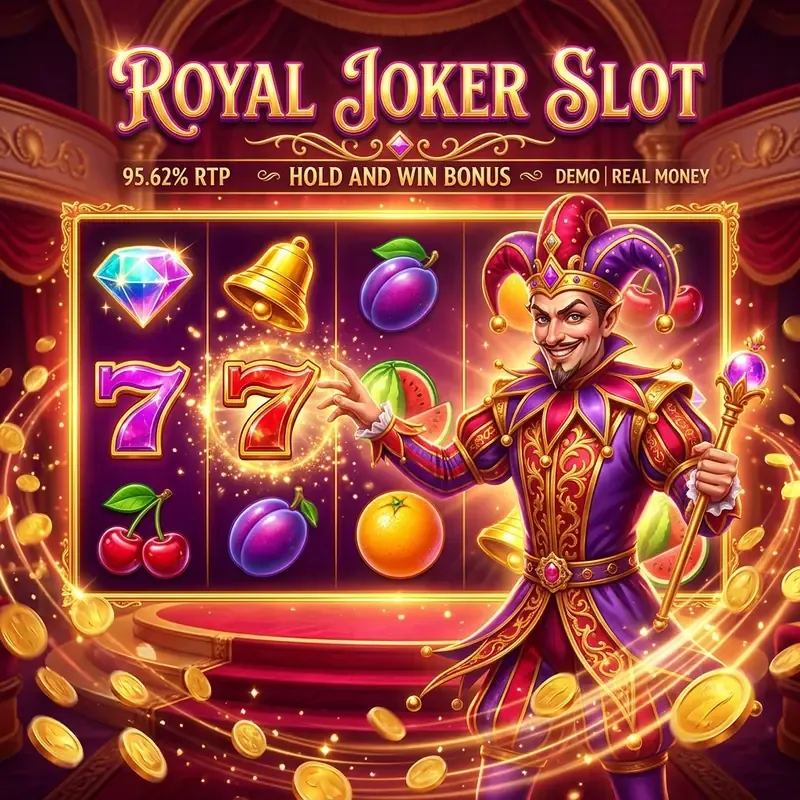
Read the paytable as three separate pools, not one list.
Pool 1, line pays in the base game. Fruits and bars pay modestly on three of a kind across five lines. This pool is thin by design. It exists to keep the balance ticking, not to generate profit.
Pool 2, bonus coin values. Inside the Hold and Win round, each coin carries a printed value, typically between 1× and 15× your stake. Coins are not multiplied by line count. They are multiplied by whatever multiplier sits in the cell they land in.
Pool 3, fixed jackpot coins. Mini, Minor, Major and Grand are special coins with locked values of 25×, 50×, 150× and 1,000×.
A simple mental schema:
BASE GAME  →  five fixed lines, fruit values, Joker wild (≈20× full line)
              ↓ three coins OR random Pile of Gold trigger
BONUS GRID →  coins (1×–15×) + jackpot coins (25×/50×/150×/1,000×)
              + Royal Bonus collector (reel 2 only)
              + Joker multiplier cells (×2, growing +1×)
              ↓
TOTAL      →  sum of coin values × cell multipliers → ceiling 21,150×
Because there is no royal joker bonus buy, you cannot pay your way into Pool 2 and Pool 3. That is worth noting against sector norms: industry analysis of bonus-buy titles reports an average bonus purchase costing 50 to 100 stakes, with individual games offering entry from 25 to 40× and up to 200 to 500× the stake, which shows the capital outlay involved compared with a normal spin (US casino guide industry analysis of bonus-buy slots, 2023). Royal Joker's answer is different. You wait.